지혜 도 덕 인

Korean Wisdom

Centuries of Confucian virtue, Buddhist insight, and Joseon philosophy — distilled into words that endure.

배움에는 끝이 없다

— · 지혜 · —

Ancient Words,
Timeless Relevance

Korea's greatest thinkers — from the Confucian scholars of the Joseon dynasty to the Buddhist monks of Silla — have left a profound treasury of wisdom on how to live with virtue, sincerity, and purpose. Debated in royal academies and inscribed on hanji scrolls, these ideas shaped a civilisation.


Korean Wisdom brings this rich tradition to your pocket — curated quotes from Yi Hwang, Yi I, Wonhyo, Jeong Yakyong, and many more. Begin each morning with a thought that grounds you. End each evening with one that inspires.

Words That Endure

"Sincerity is the way of Heaven. Attaining sincerity is the way of man."
Yi Hwang (Toegye)
"The learning that does not translate into practice is no learning at all."
Yi I (Yulgok)
"One mind contains all dharmas; all dharmas return to one mind."
Wonhyo
"A scholar who does not help the people is no scholar at all."
Jeong Yakyong (Dasan)
"Even a single act of loyalty carves its name into the mountain of history."
Seong Sam-mun
"To know what you know and know what you do not know — that is true knowledge."
Choe Chiwon

Masters of Thought

退
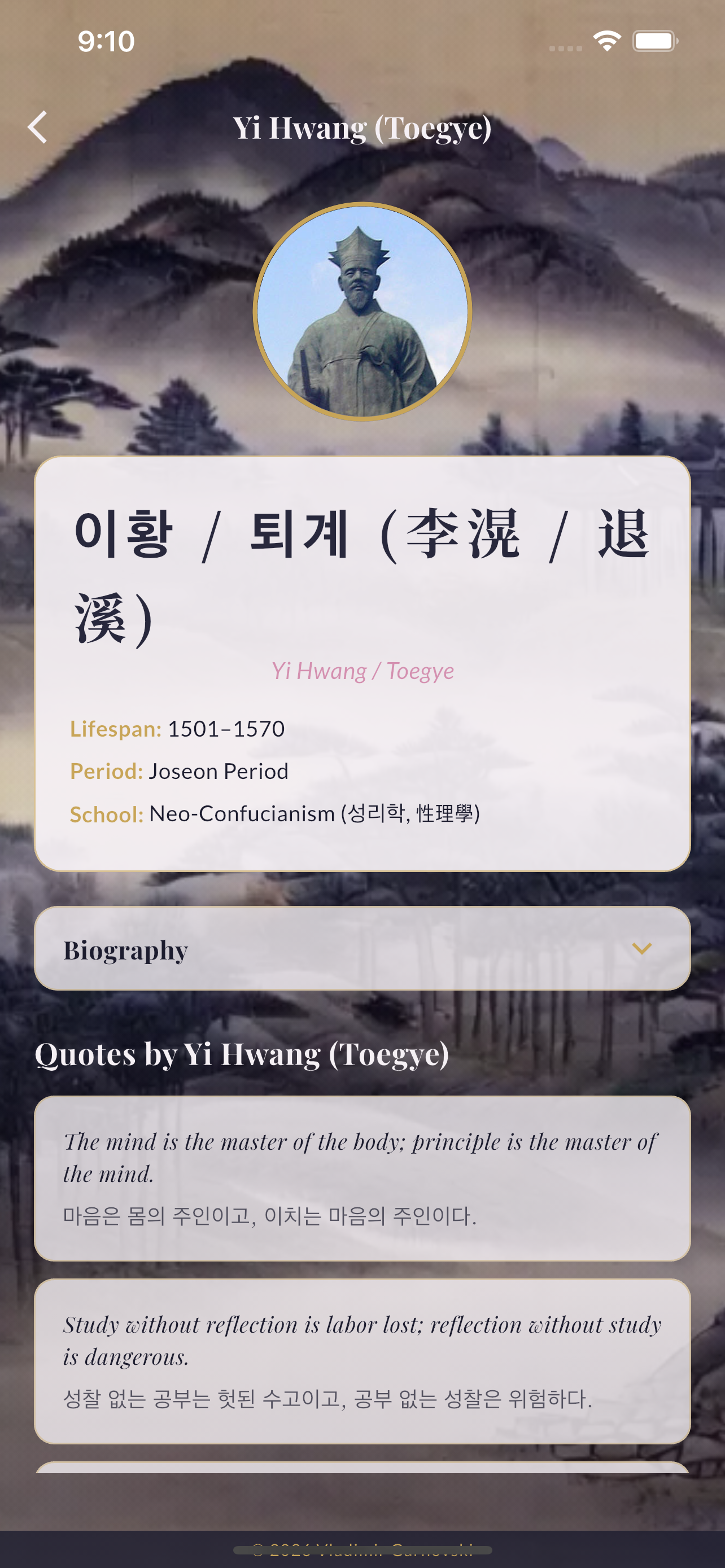
Yi Hwang — Toegye
1501–1570

Korea's foremost Neo-Confucian philosopher, whose Ten Diagrams on Sage Learning remains the summit of Korean classical thought.

Yi I — Yulgok
1536–1584

Statesman and philosopher who refined the Neo-Confucian debate on principle and material force, emphasising practical reform and sincerity.

Wonhyo
617–686

Revolutionary Buddhist monk who taught that all doctrines share one mind, and brought Buddhism to ordinary Korean people through music and dance.

Jeong Yakyong — Dasan
1762–1836

Champion of Silhak (practical learning), he wrote over 500 books advocating governance, science, and justice for common people.

Choe Chiwon
857–?

The first great Korean writer, who synthesised Confucian, Buddhist, and Taoist thought and brought Korean letters onto the world stage.

Seong Sam-mun
1418–1456

One of the six martyred ministers who gave his life for loyalty and principle, becoming an eternal symbol of Confucian moral courage.

Jinul
1158–1210

Reformer of Korean Buddhism who united the meditative and doctrinal schools, teaching sudden enlightenment followed by gradual cultivation.

Uicheon
1055–1101

Royal monk who traveled to China to study and returned to unify Korean Buddhist schools, compiling a vast supplement to the Buddhist canon.

See the App

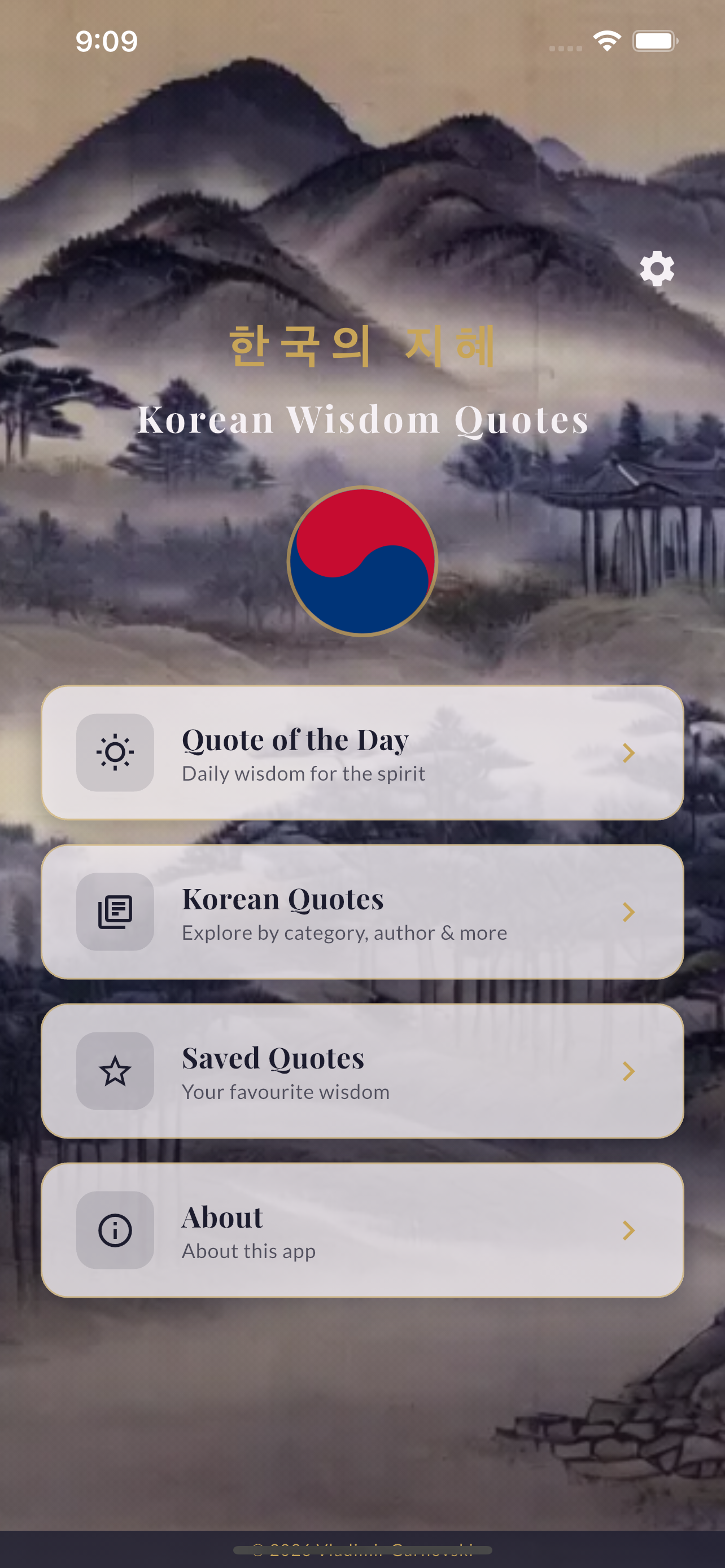
Home Screen

Home Screen

Daily Quote

Daily Quote

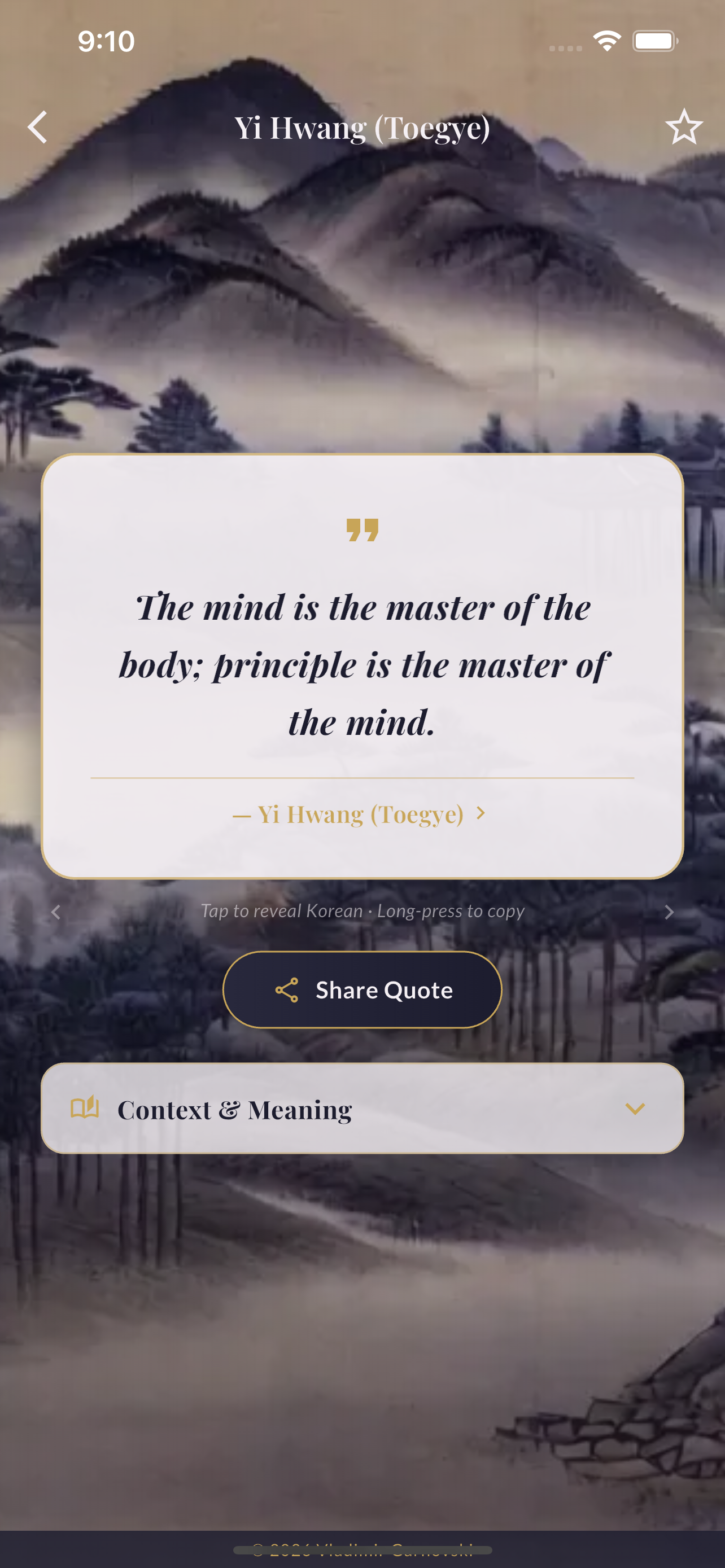
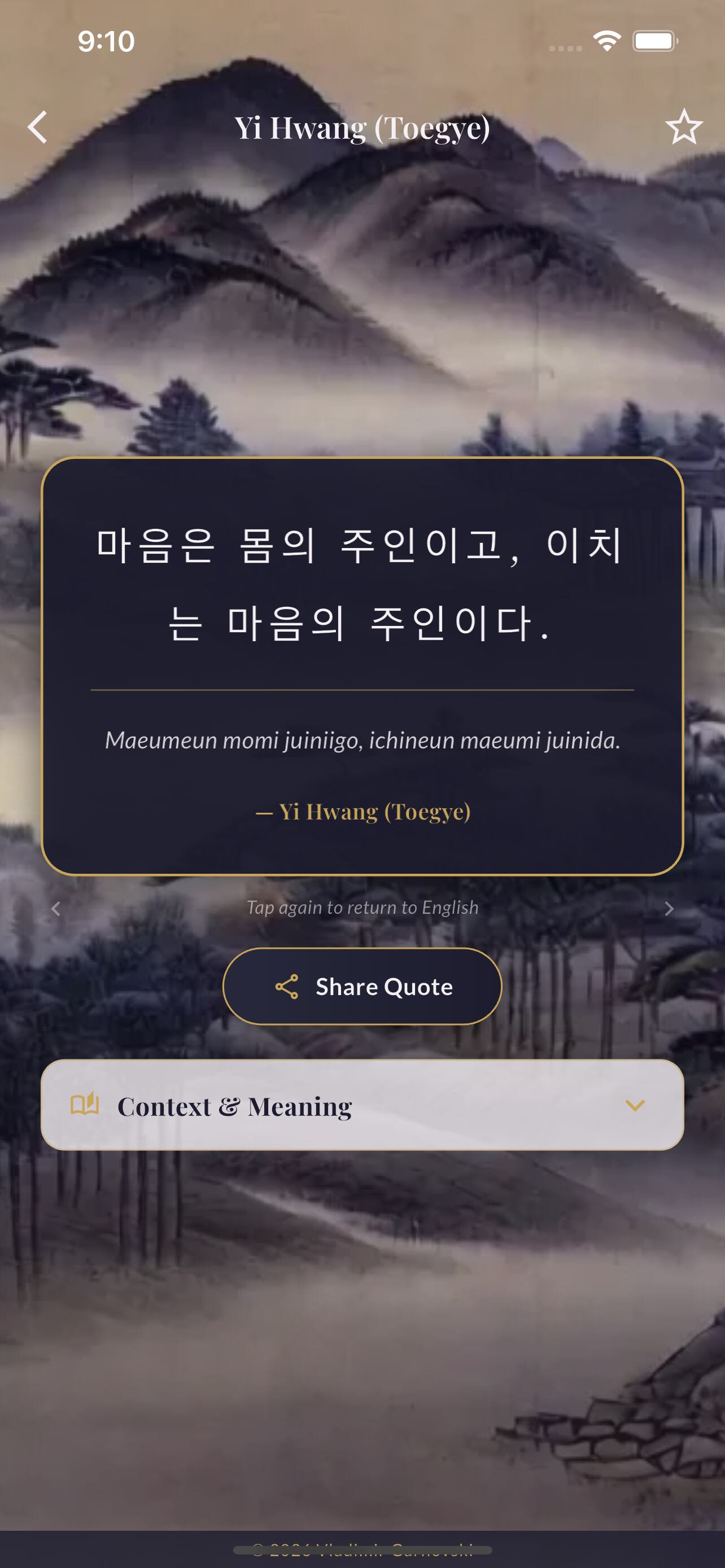
Quote Detail

Quote Detail

Browse Authors

Browse Authors

Saved Quotes

Saved Quotes

Settings

Settings

Wisdom in Your Pocket

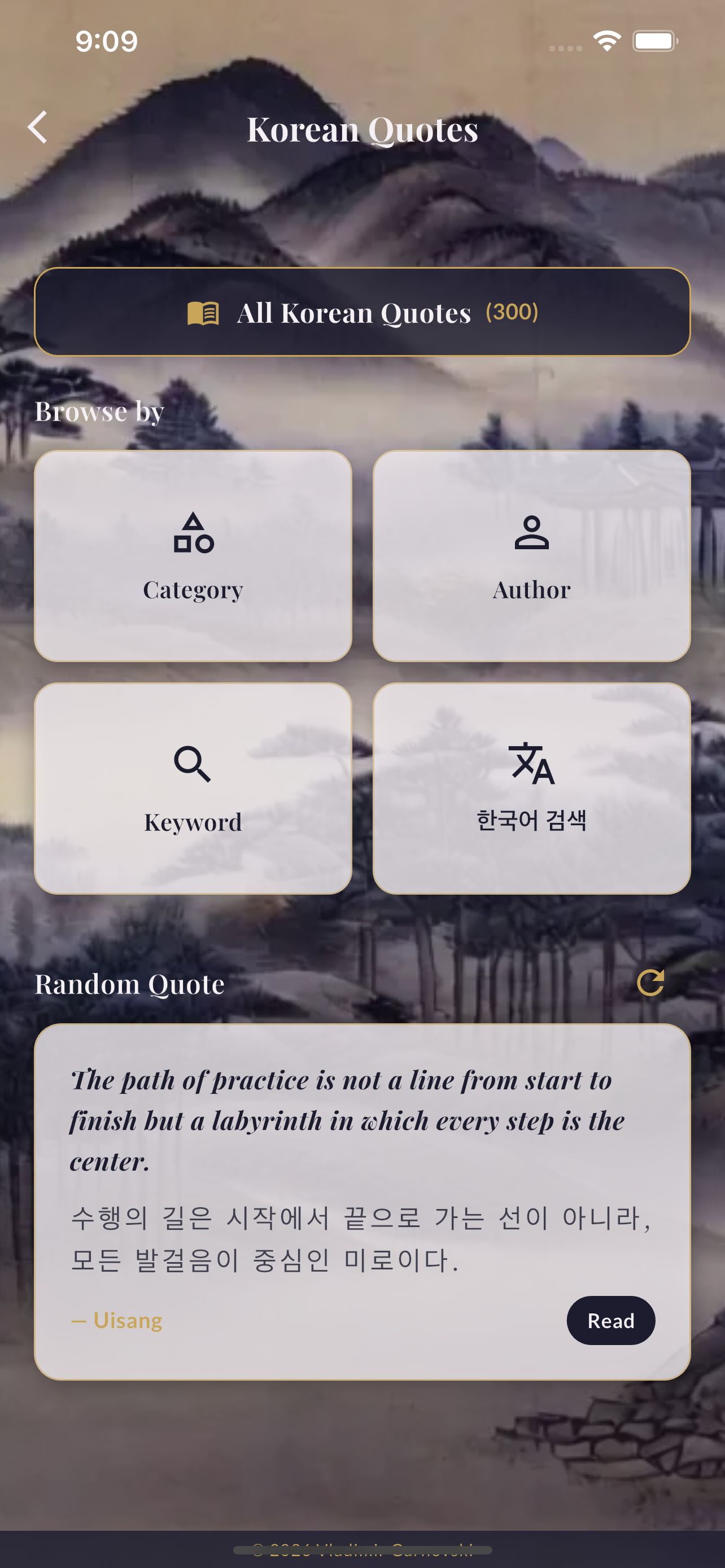
Start each day with a handpicked quote from Korea's greatest thinkers. Korean Wisdom features 300 curated sayings across Confucian philosophy, Buddhist insight, and Joseon scholarship — with original Korean text and English translation.

🏯

Daily Quotes

A new quote each morning from the sages of the Joseon dynasty and beyond.

📚

300 Curated Quotes

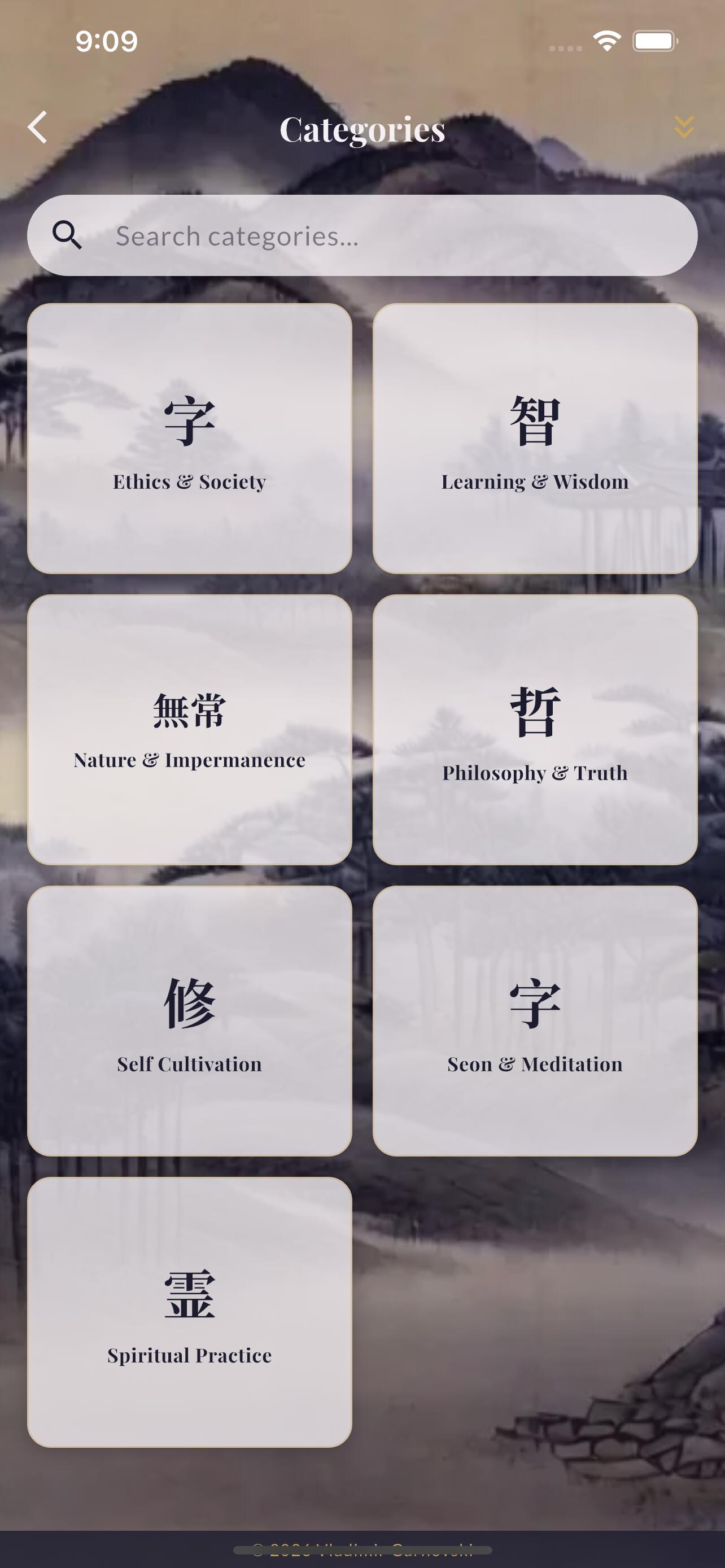
Browse by philosopher, era, or theme — virtue, governance, Buddhist insight, and more.

🔖

Save & Share

Bookmark your favourites and share wisdom beautifully with a hanji-inspired card.

🎵

Ambient Music

Meditative background music for a calm, focused reading experience.

Korean Wisdom App